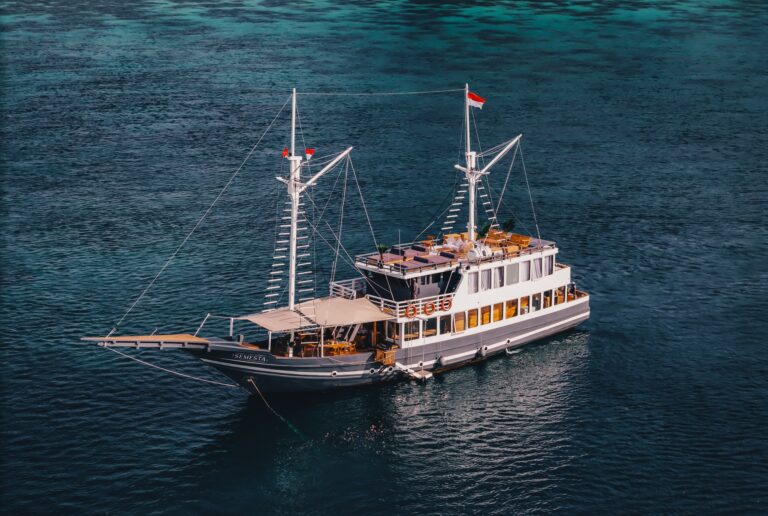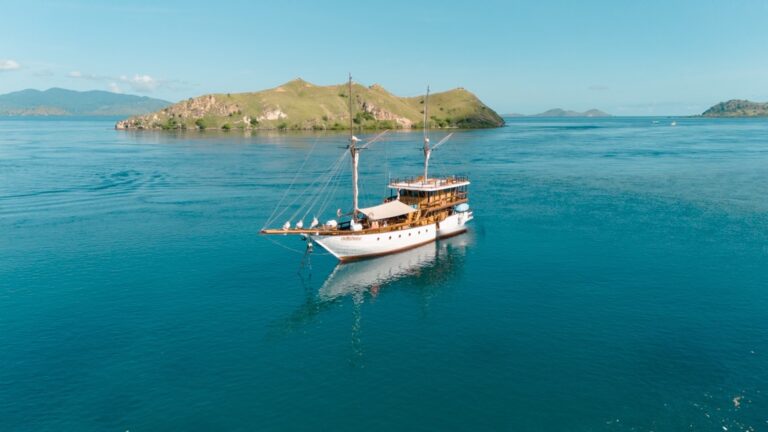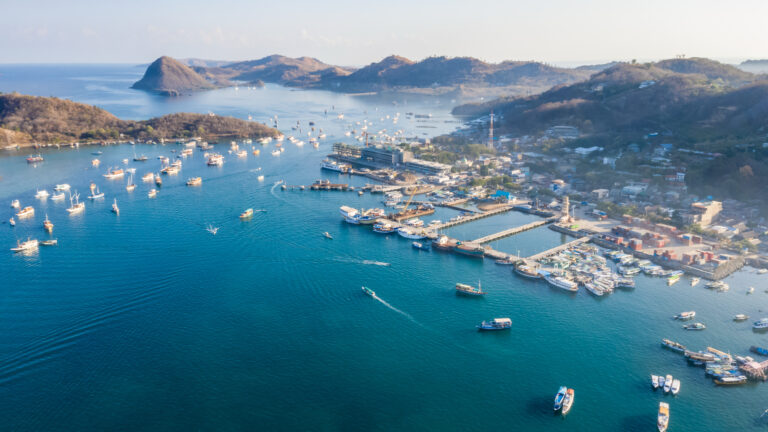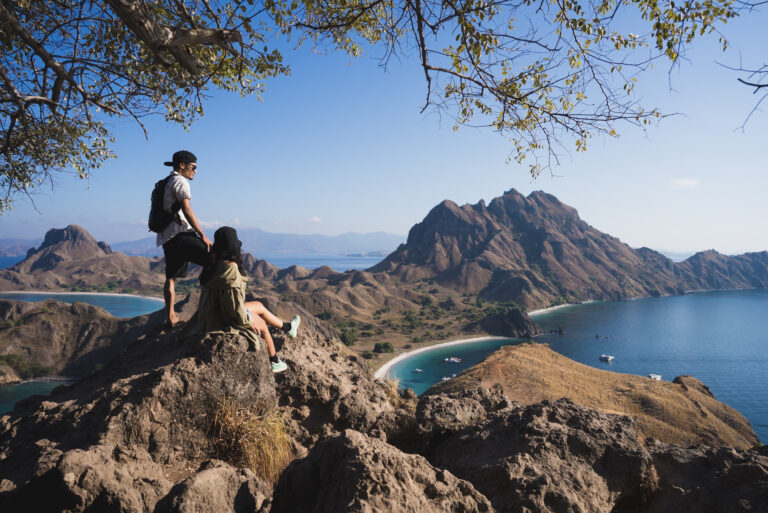
Ask ten guides about the best time to visit Komodo Island and you’ll get the same answer ten times: come in the dry season, skip the rest. It isn’t wrong. It’s just half the story.
We live and sail these waters all year, and here’s what that answer leaves out. Komodo doesn’t really have a bad season. It has different ones. The islands look and feel like a different place in March than they do in August, and both are worth the journey. So the real question isn’t when Komodo is good. It’s which version of it you want.
Why there’s no single best time to visit Komodo Island
Komodo National Park sits in the tropics, which means it runs on two broad seasons, not four: a dry one from roughly April to November, and a wet one from about December to March. That’s the textbook version.
Out on the water it feels less like two switches and more like a slow rotation. The hills shift from deep green to golden brown and back. The sea changes temper. The light changes with it. None of it is the wrong Komodo. It’s just a different one, and the better question is what you want to see and feel when you get there.
Komodo’s year, mood by mood
Here’s the year the way we actually live it out here, not the way a weather chart lays it out. Four rough moods, and the edges between them blur.
Green and wild (December to March)
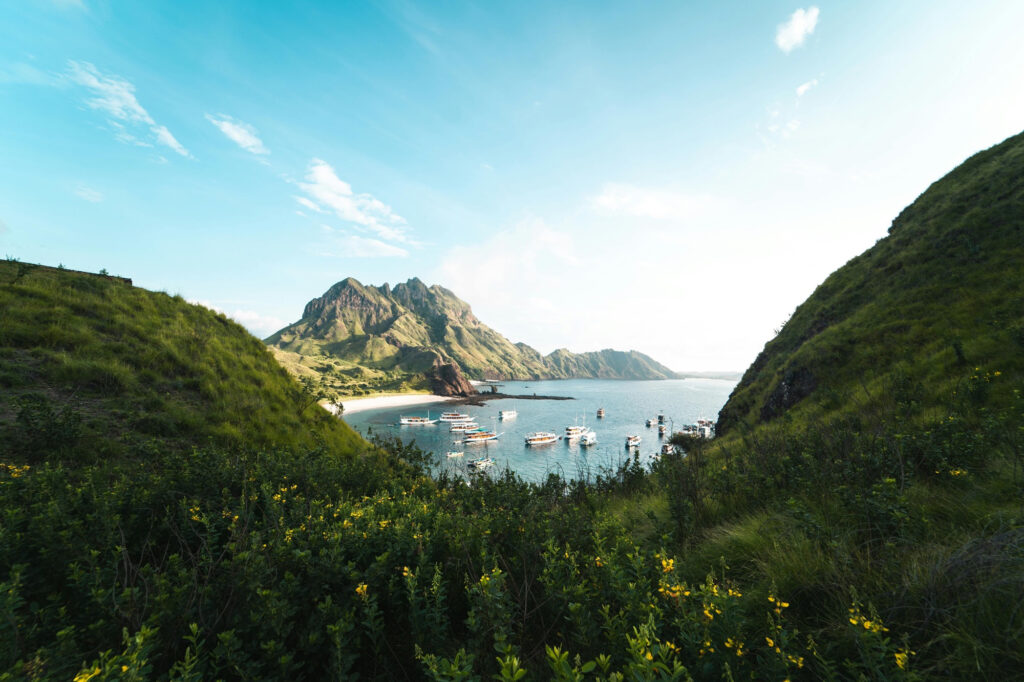
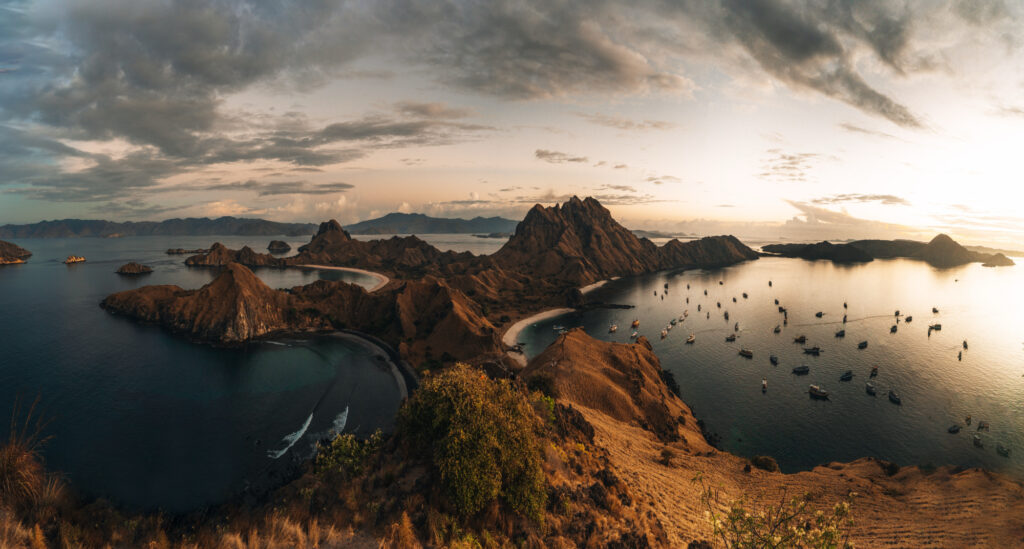
This is the wet season, and it’s the most underrated time to be here. The rain mostly falls in the afternoon and overnight, so the days often stay blue, and the islands are at their greenest. Padar’s ridgelines go lush, the light turns big and moody, and the anchorages empty out. Fewer boats, quieter mornings, the islands closer to how they must have felt before anyone came looking.
The seas are at their roughest now, so crossings get bumpier and the odd northern site gets skipped for somewhere more sheltered. The trade is a good one. From December the plankton blooms pull manta rays into the channels in numbers you won’t see any other time of year, dozens over a single dive down in the south. For the traveler who likes a place a little wild and mostly to themselves, this is the one. There’s something about a warm downpour on an empty beach that the dry-season crowd never gets to see. If you want those quiet anchorages to yourself, this is when a private charter earns its keep.
The turn (April to May)
If we had to point a first-timer at one window, it’s often this one. The rains ease off, the crossings settle out of the rough months, and the hills stay deep green, at their lushest right before they start to gold over. The mantas haven’t thinned out yet either, April still holds them. Green Komodo with easy water and room to breathe, and a window most planners skip straight past on their way to peak season.
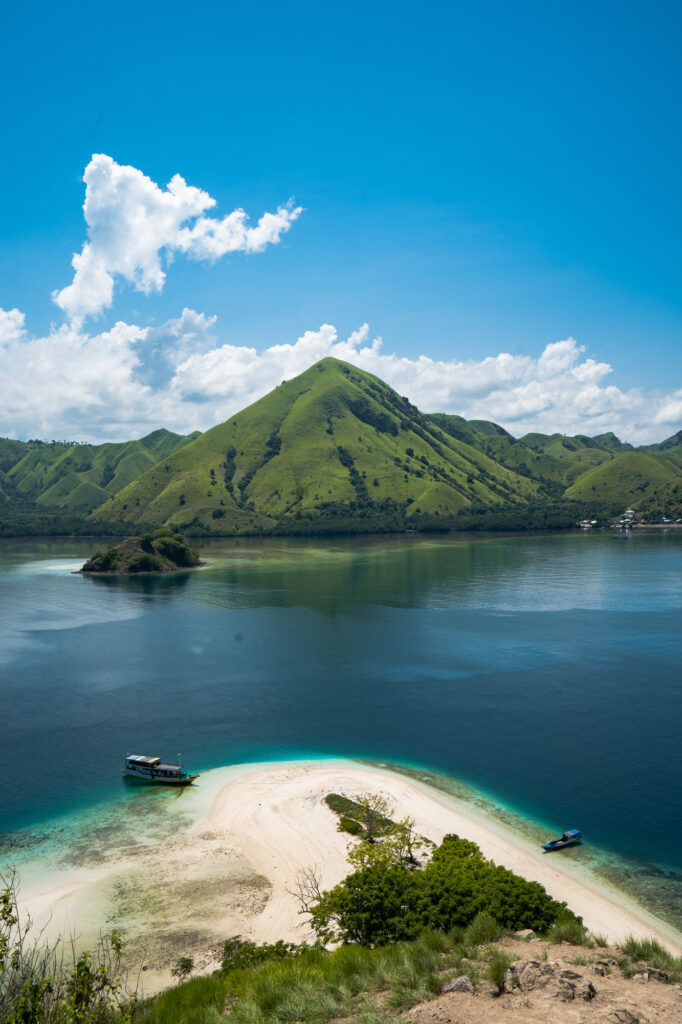
It’s a kind season on the body too: warm without the deep-dry heat, green without the mud of the peak rains.
Golden and dry (June to September)
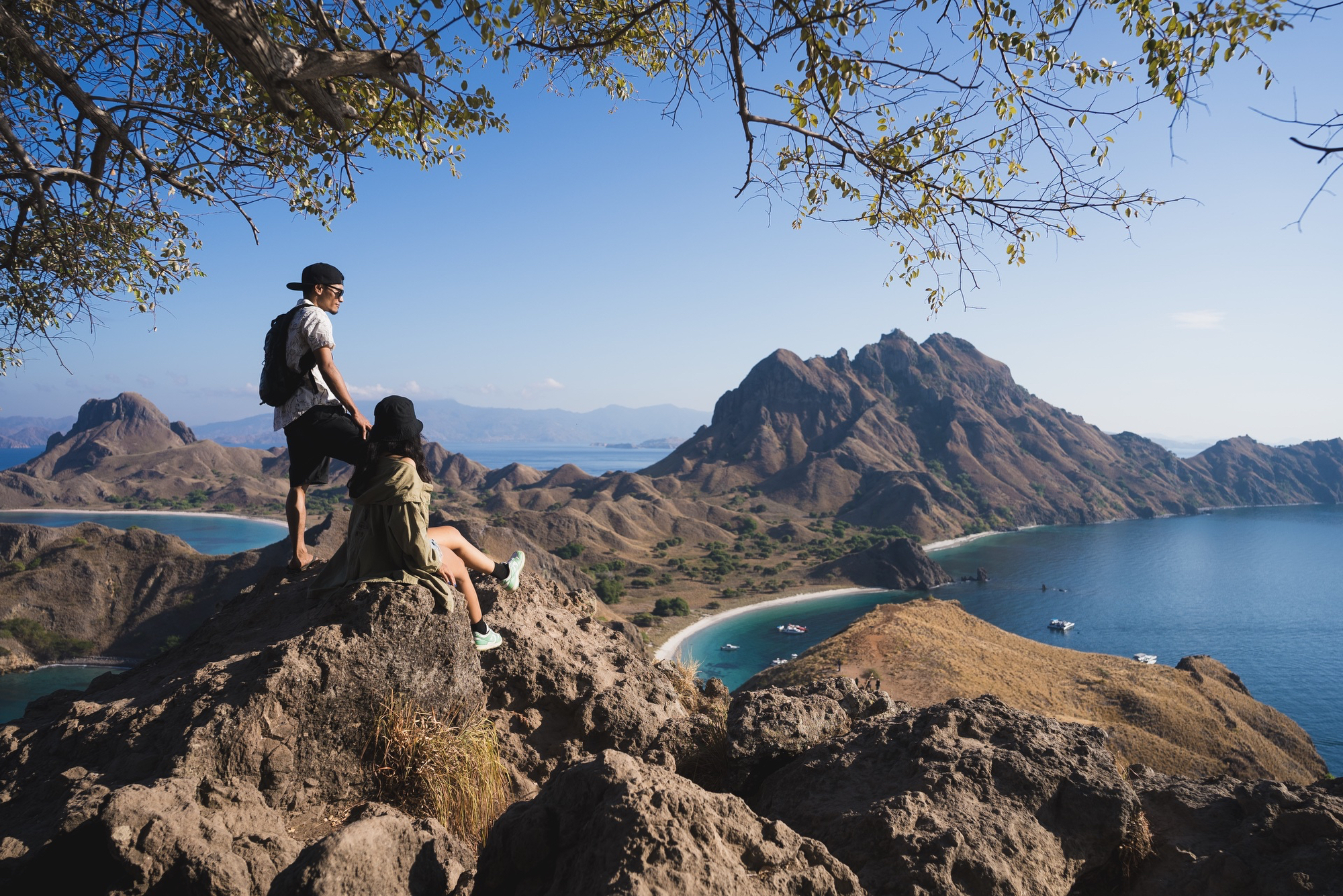
This is the Komodo on the postcards. Calm seas, reliable sun, and hills turned gold and tawny, the look most people picture before they arrive. Visibility underwater opens out past twenty-five metres and every site on the map is in play. It’s the busiest stretch and the hottest, and sunrise on Padar comes with company.
The one thing you give up is the mantas. They’re still around, but as residents passing through rather than the crowds that gather in the green months. None of that makes it a bad time. If you want classic, blue-sky Komodo and you don’t mind sharing it, book early and come in the dry.
The wind-down (October to November)
The dry season starts to let go. The gold hills soften as the first rains return, the seas begin to build again, and the mantas move back into the channels. November is a local favourite for exactly this: the manta zones are active again, with far fewer boats to share them with.
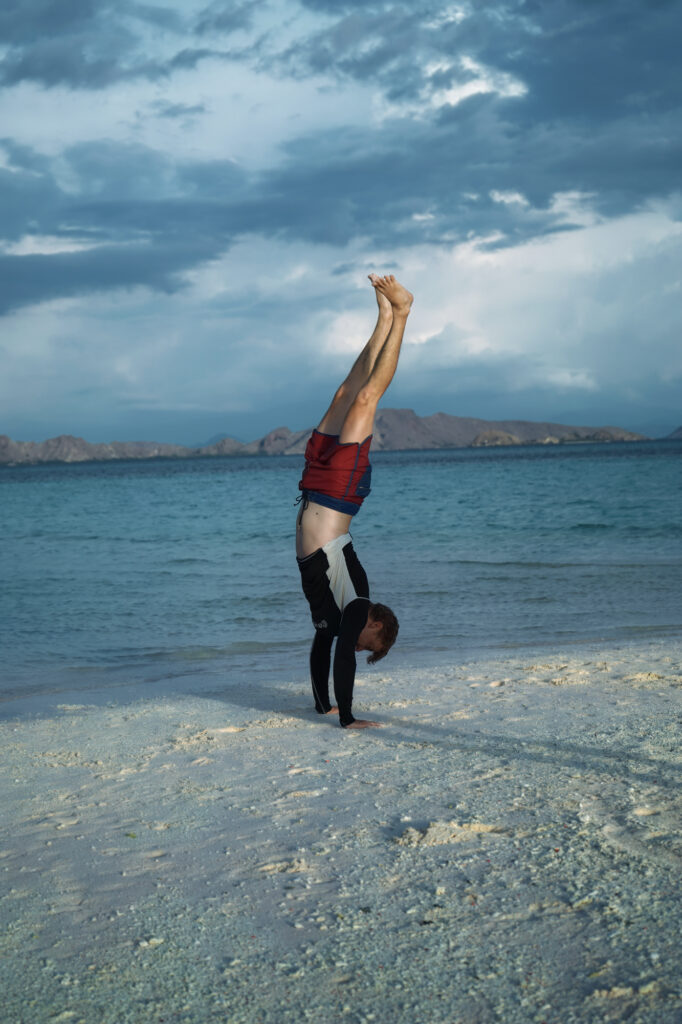
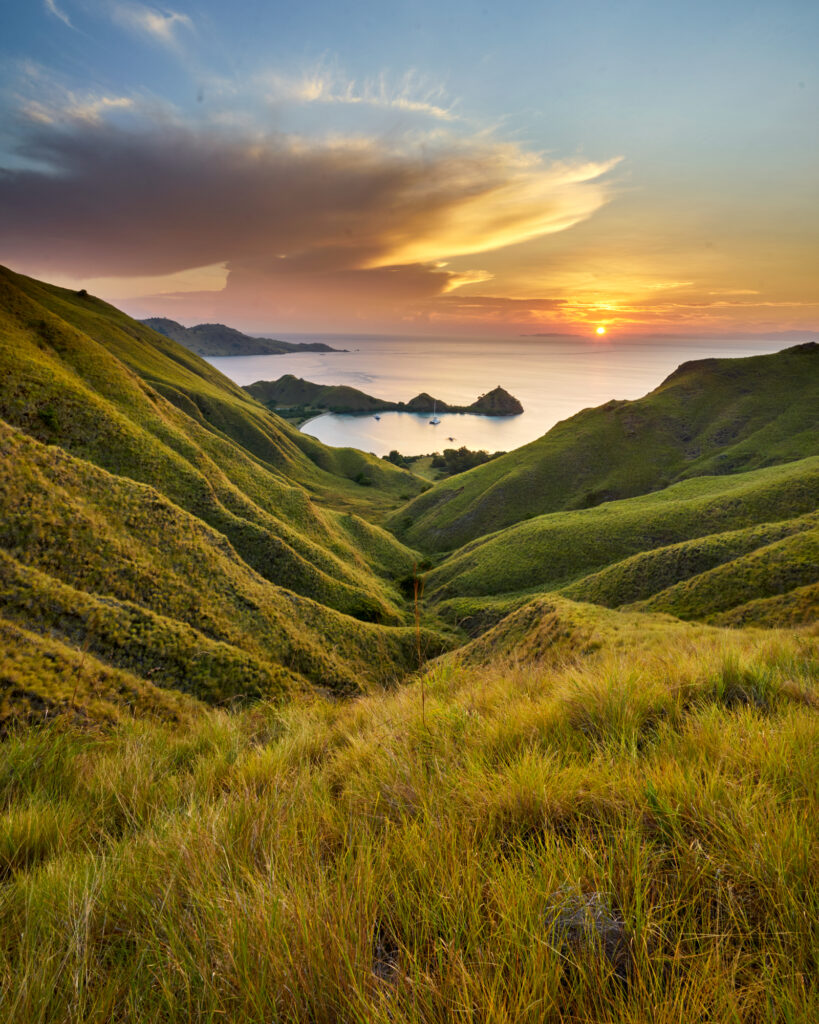
The peak crowds have thinned and the prices with them. Sunsets have a particular softness to them now, the kind of light that makes the last evening on deck hard to leave. You get most of what makes the dry season great with more space around it, which is why a lot of people who know the park come exactly now.
What actually changes through the year, and what doesn’t
A few things shift with the calendar, and a few don’t. Worth knowing before you pick a month.
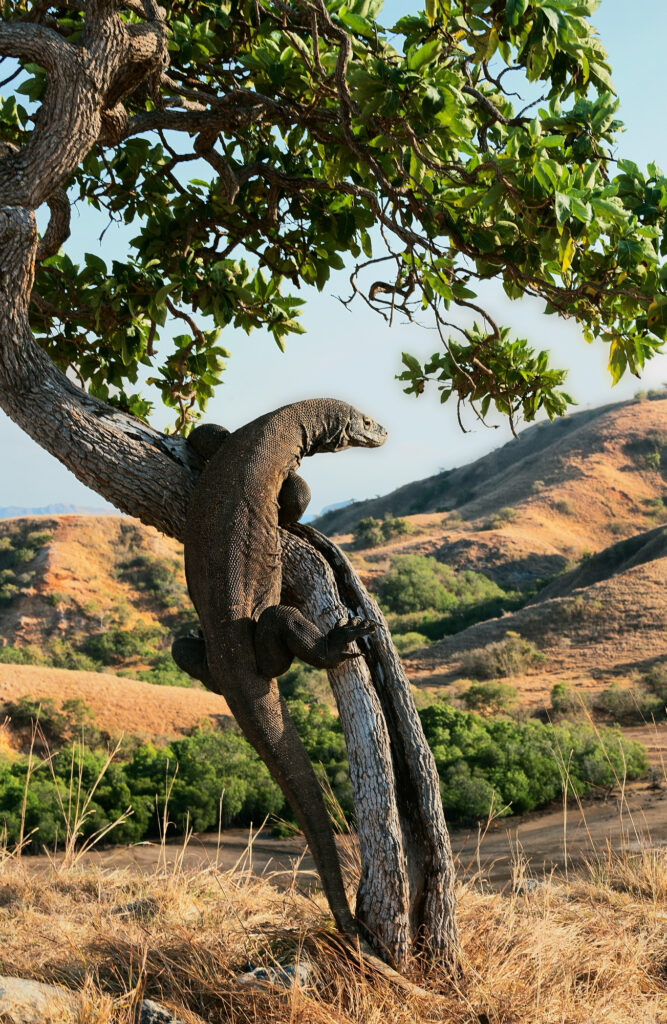
The dragons are here all year. That part never changes, and there is no month that is a bad month to go and meet them. What changes is how you do it: a ranger reads the ground and the season on the day and keeps everyone at the right distance.
The hills are the biggest visual change. Green through the rains and just after, roughly December to May, then gold from June through September, softening again once the first rains return. It’s why the same viewpoint can look like two different islands depending on when you stand on it, and a big part of why coming back hits differently.
The sea is calmest from June to September and at its roughest from December to March, with April, May, October and November sitting somewhere in between. Day-to-day weather still matters more than the month on the calendar. A good crew plans the route around the conditions on the day, not a printout.
Crowds peak from about July to August, and Padar’s sunrise viewpoint is where you feel it most. The shoulder months on either side, the turn and the wind-down, hand you most of the good weather with a lot more room.
Diving runs on its own clock. Visibility is at its best through the dry months and drops back in the green ones, and the mantas do the opposite, so the right month depends entirely on what you came to see. Komodo currents are serious in every season. Tell us what you’re after and we’ll point you at the right window.
So when should you actually go?
Pick by what you want, not by a blanket rule. After green hills, mantas and an anchorage to yourself? Come in the rains or the turn. Set on classic blue-sky, gold-hill Komodo? Come in the dry, and book the peak early. Want the best trade of good weather for fewer people? Aim for the shoulders.
And here’s the part most guides skip: you don’t have to choose just one. The people who know these islands best have usually seen them in more than one mood. Komodo green and wet is a genuinely different journey from Komodo gold and dry. Catch one, and there’s a real case for coming back for the other.

The best days out here were never on the plan. The water lights up with plankton, the captain cuts the engines, everyone jumps in. You can’t book that by the month.
Ata, Pirate Journey
Questions we get asked about the seasons
How many days do I need in Komodo?
More than one, whatever month you come. A day trip hits the headline stops, but a 3 days 2 nights liveaboard is where the park opens up: you reach the quieter anchorages, you get the mornings before the day boats arrive, and you sleep out there instead of commuting. Four days and up gets you further still.
Can I dive in Komodo all year round?
Yes, the sites are diveable in every month. What changes is the water: visibility opens out past twenty-five metres through the dry season and drops back in the green months, while the mantas gather in the biggest numbers from December to March. Komodo currents are serious in any season. Tell us what you want to see and your certification level and we’ll point you at the window that suits it.
Do journeys get cancelled when the weather turns?
Rarely cancelled, more often reshuffled. A crew that knows these waters changes the order of the stops or picks a different anchorage rather than sitting it out, which is why the day-to-day forecast matters more than the month. In the roughest stretch, December to March, that most often means a northern site swapped for somewhere more sheltered. If conditions genuinely make a crossing unsafe, the crew will say so, and we’ll talk to you about it straight.
How far ahead should I book for the dry season?
Earlier than most people expect for July and August. The vessels people ask for by name fill their peak dates first, and cabins on the popular shared journeys go long before the dates themselves. Message us with the month you’re thinking and we’ll tell you honestly what’s still open.
What should I pack if I come in the wet season?
A light rain layer and a dry bag, and that is most of it. The rain comes warm and mostly in the afternoon and overnight, so you are not packing for cold, you are packing to keep a phone and a camera dry between showers. Everything else is the same kit as the dry season: reef-safe sunscreen, a hat, and shoes you can climb a ridge in.
Once you know which Komodo you’re after, the rest is just matching it to the right vessel and the right days. Tell us roughly when you’re thinking and the kind of journey you have in mind, and we’ll tell you honestly what that month looks like out on the water. Dig into the islands on our Komodo Islands page, have a look through the fleet we’d actually sail, or message us on WhatsApp and we’ll build it around the version of Komodo you want.